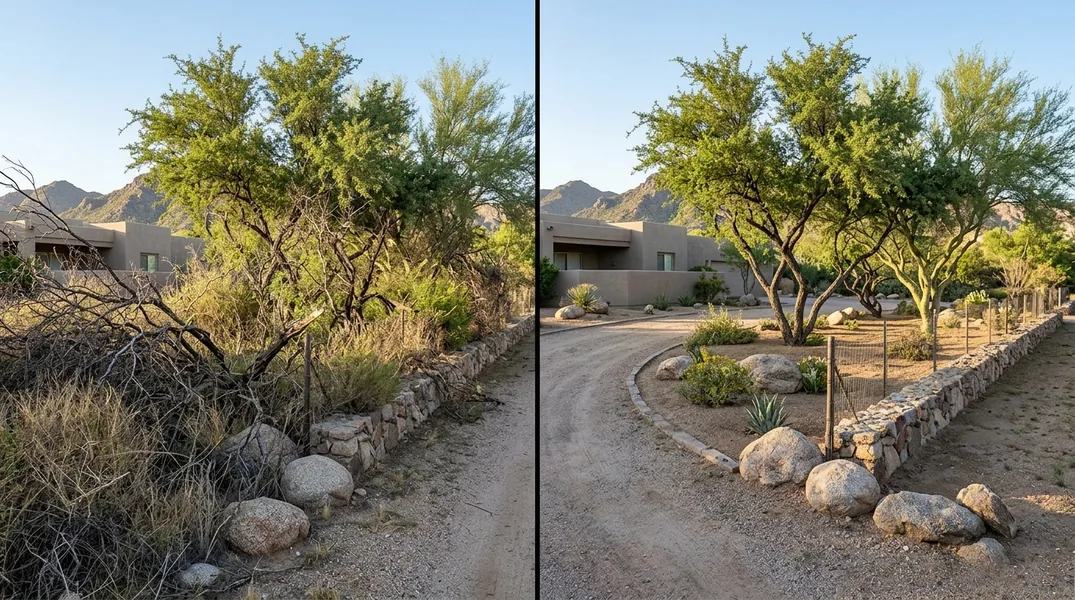
Understanding Monsoon Season and Microburst Damage in Scottsdale
Monsoon season in Scottsdale typically runs from June through September, bringing intense thunderstorms, powerful winds, and occasional microbursts that can wreak havoc on unprepared landscapes. A microburst is a sudden, violent downward burst of wind from a thunderstorm that can exceed 100 miles per hour, creating damage patterns that rival those of tornadoes. Unlike a typical windstorm that comes from one direction, a microburst spreads outward in all directions from its impact point, making it particularly destructive to trees that aren't properly maintained.
For homeowners in Scottsdale, understanding the unique risks of monsoon tree damage is critical. Our desert landscape features trees that have adapted to arid conditions but may not be structurally optimized to withstand the violent wind shears and heavy moisture loads that arrive during monsoon season. Trees with weak branch attachments, dense canopies, or structural defects become dangerous liabilities when a microburst strikes. The good news is that proper preparation and preventive maintenance can significantly reduce the risk of catastrophic failure.
Why Preventive Tree Trimming Before Monsoon Season Matters
Tree Trimming & Pruning is one of the most effective ways to prepare your trees for the intense weather ahead. When arborists remove dead branches, thin out overly dense canopies, and correct structural imbalances, they reduce wind resistance and improve the tree's ability to flex and move with strong gusts rather than snap or uproot. A tree with a properly thinned canopy allows wind to pass through more easily, similar to how a flexible rope moves with the wind better than a rigid pole.
The timing of preventive trimming is crucial. Ideally, you should schedule Tree Trimming & Pruning at least four to six weeks before monsoon season begins, typically in April or May. This allows the tree time to compartmentalize its wounds and recover before facing the intense stress of summer storms. During the trimming process, experienced arborists will remove crossing branches, eliminate weak V-shaped crotches where branches meet the trunk, and eliminate any branches showing signs of disease or pest damage. These interventions directly address the branches most likely to fail during a microburst.
Beyond safety, proper trimming also improves tree health by increasing air circulation and sunlight penetration to the canopy. This reduces fungal issues and pest problems that can weaken trees before monsoon season arrives. When you invest in preventive trimming now, you're not just protecting your property during the next storm, you're also setting your trees up for long-term vitality.
Identifying Trees at High Risk for Monsoon Damage
Not all trees in your yard face equal risk during monsoon season. Trees with certain characteristics are far more vulnerable to microburst damage and should be your priority for inspection and maintenance. Look for trees with multiple trunks growing from a single base, as these split-stem structures have inherent weakness at the point where they diverge. Similarly, trees with heavy, one-sided canopies or those that have been topped or severely pruned in the past often develop weak, fast-growing branches that can't withstand high winds.
Trees with shallow root systems are particularly concerning in the Scottsdale area. Many ornamental and non-native species planted in desert landscapes have roots that spread horizontally rather than deeply, providing less anchoring strength. Additionally, trees that have been stressed by drought, pest infestations, or disease are more likely to fail during extreme weather. If you notice any of these risk factors in your landscape, contact Scottsdale Tree Service for a professional assessment. Our team can evaluate your specific trees and recommend whether preventive trimming, cabling, or in some cases, Tree Removal is the best course of action.
Age is another factor to consider. Older trees often have accumulated internal decay or structural defects that aren't visible from the ground. A experienced arborist can use specialized tools and techniques to assess internal tree health and structural integrity, helping you make informed decisions about which trees need attention before monsoon season arrives.
Emergency Preparation: What to Do When a Storm Hits
Despite your best preventive efforts, severe microburst damage can still occur. If a tree is damaged, partially uprooted, or poses an immediate hazard to your home or family, you'll need Emergency Tree Service right away. Scottsdale Tree Service offers 24/7 emergency response to handle dangerous situations safely and quickly. Never attempt to remove a fallen tree or cut up a damaged tree yourself, as these situations can be extremely hazardous, especially when power lines are involved or the tree is in an unstable position.
If you experience storm damage, document everything with photos for your insurance claim, then call Scottsdale Tree Service immediately at (480) 409-7296. Our emergency crews are trained to assess hazardous situations, remove dangerous branches and fallen trees, and restore safety to your property. We have the equipment and expertise to handle complex removals that would be impossible for a homeowner to manage. After the emergency is resolved, we can discuss longer-term restoration or replacement options for your landscape.
Storm-Resistant Tree Species for Scottsdale Landscapes
If you're considering replanting areas of your landscape or adding new trees, choosing storm-resistant species is a smart long-term strategy. Native and adapted desert trees generally have better structural integrity for monsoon conditions than many ornamental imports. Palo verde trees, mesquite, desert willow, and acacia species have evolved to withstand intense heat, drought, and occasional violent weather. These trees typically have flexible wood that moves with the wind rather than snapping, and their root systems are well-adapted to desert soil conditions.
When selecting new trees, also consider mature size and form. Avoid trees that naturally develop heavy, unbalanced canopies or weak branch structures. Work with an experienced arborist when planning your landscape to ensure you're choosing species that will thrive in Scottsdale's climate while also providing the structural resilience you need for monsoon season. If you're uncertain about which species are best for your property, our team can provide recommendations during a free estimate consultation.
Getting Your Trees Ready: Schedule Your Pre-Monsoon Inspection Today
The time to prepare for monsoon season is now, before the storms arrive. A professional pre-monsoon tree inspection from Scottsdale Tree Service takes the guesswork out of storm preparation. We'll explain the risks we identify in plain language so you understand exactly why we're recommending specific services.
Don't wait until a microburst damages your trees and threatens your home. Contact Scottsdale Tree Service today at (480) 409-7296 or request a free estimate online. We'll schedule a convenient time to inspect your property and discuss your options. Our team has helped countless Scottsdale homeowners prepare their landscapes for monsoon season, and we're ready to help you protect your investment and your family's safety. Monsoon tree damage is preventable with proper planning and professional care, so reach out today to get started.
Looking for a professional tree service contractor in Scottsdale? Scottsdale Tree Service responds fast for all your tree service needs.
Get a Free QuoteOur services: Tree Removal · Tree Trimming & Pruning · Stump Grinding